

BULLSEYE: Behind the Exhibition with Scott McIntosh
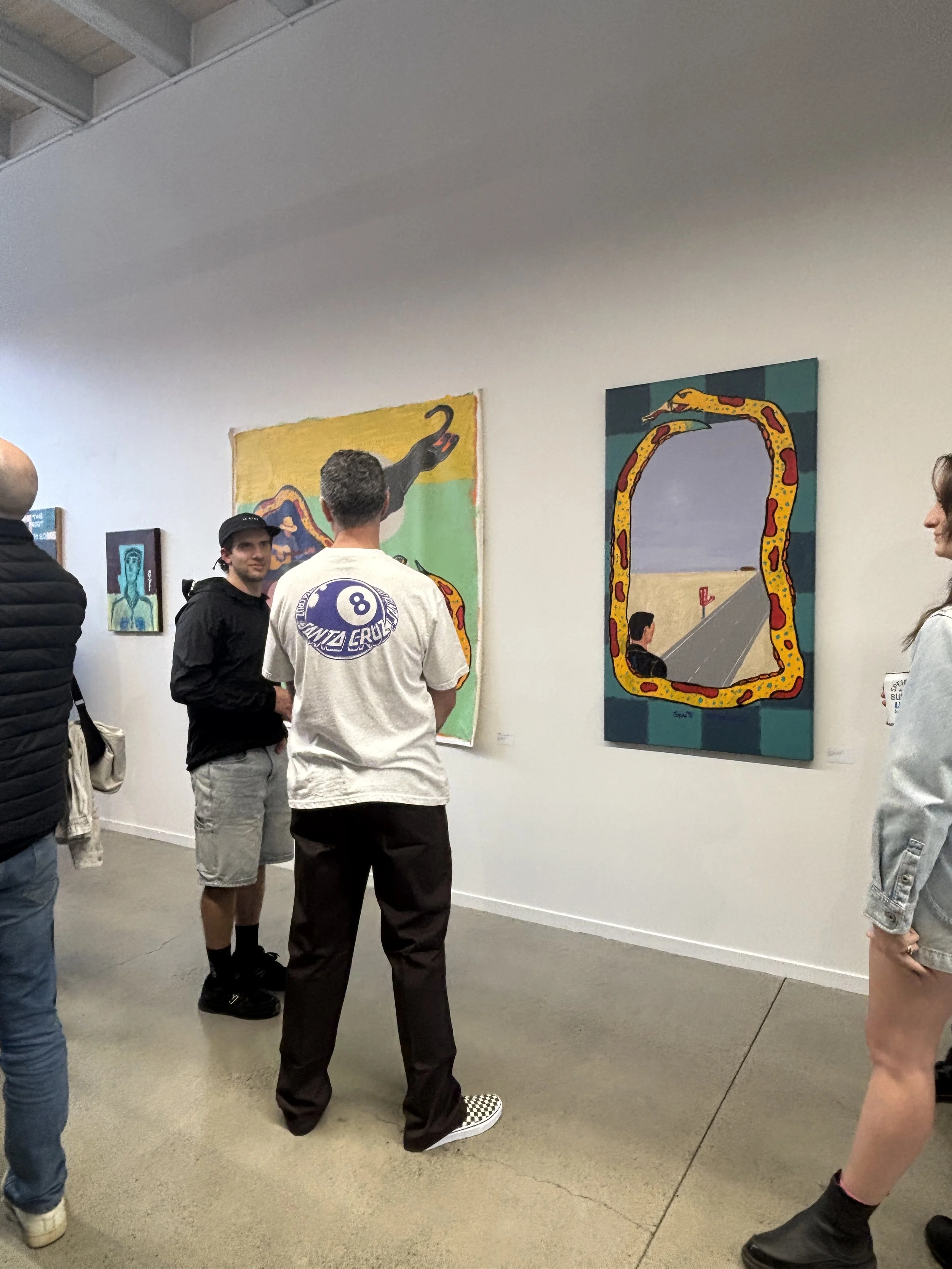
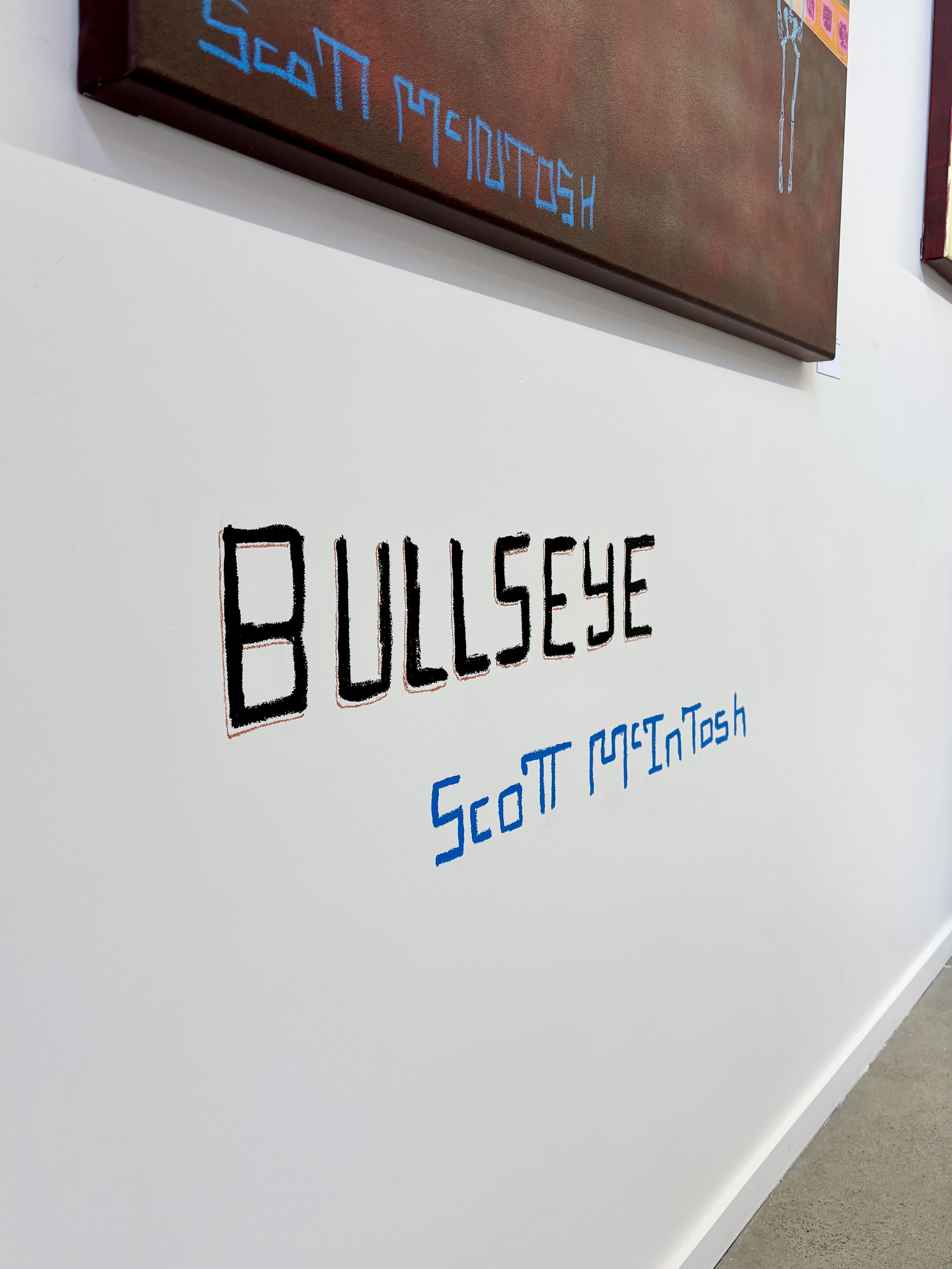
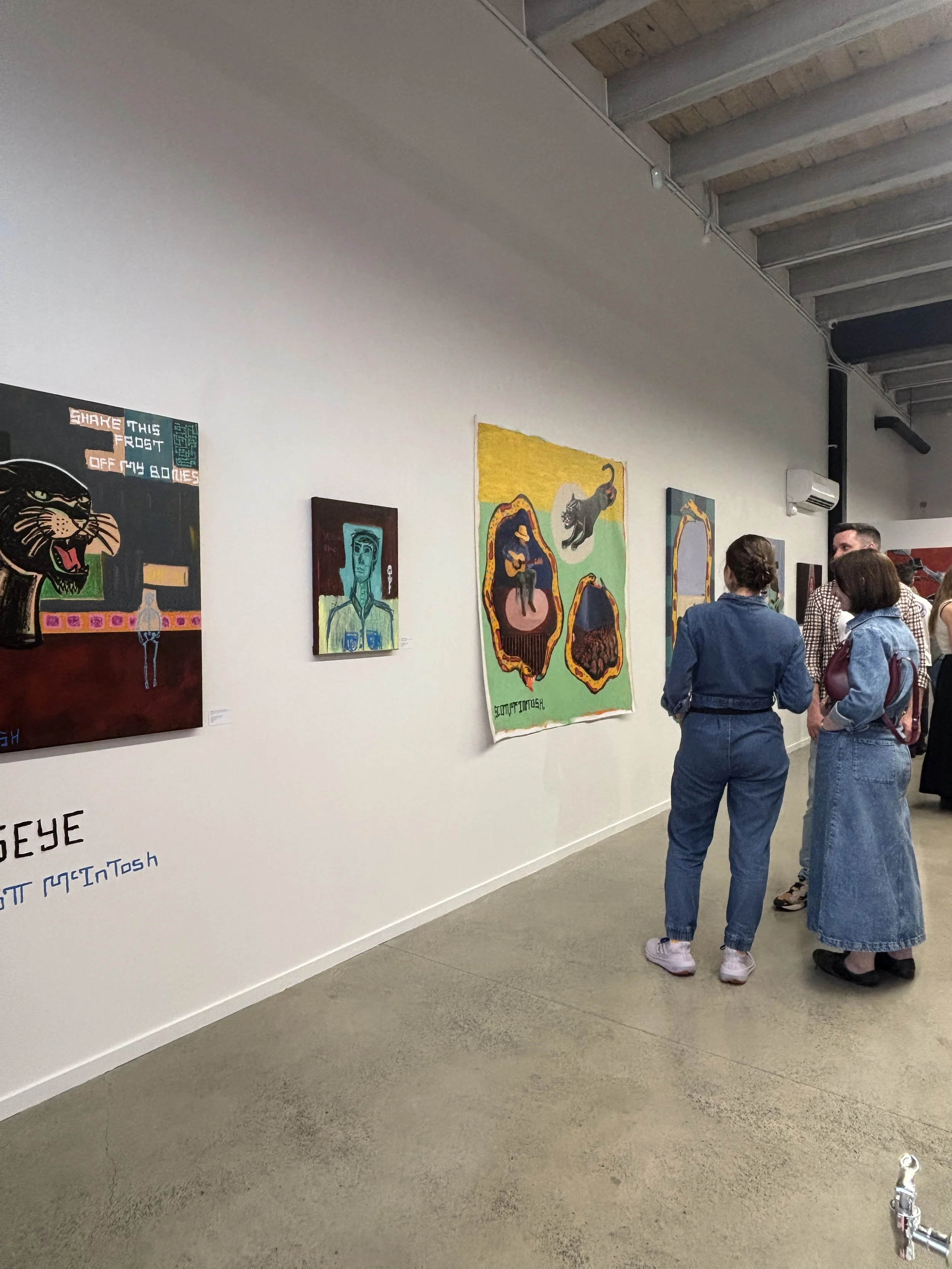
Last night we opened BULLSEYE, Scott McIntosh’s first solo exhibition at Ashe, bringing together twelve months of exploration, experimentation and finding his way as an artist.
The gallery was buzzing with an incredibly supportive atmosphere - friends and family, fellow artists, collectors, gallery owners and people discovering Scott’s work for the first time. There is a real sense of encouragement around Scott taking his shot and seeing where it takes him.
Because, at the end of the day, isn't that what making art is about? Getting ideas out of your head and onto the canvas. Trying something. Seeing what works. Making mistakes. Trying again. The process is as much about discovery as it is about the finished work.
That attitude is something I personally connect with. Over the past year of establishing Ashe, I’ve learnt that there is rarely a “right” time to take the leap. You make decisions, you make mistakes, you learn from them, and you keep moving forward. Sometimes an idea doesn't quite land the way you imagined, but it can lead you somewhere much more interesting.
That spirit of experimentation is evident throughout BULLSEYE.
The exhibition is a mash-up of styles and influences. Some works are highly stylised, drawing heavily from traditional tattoo imagery, while others move towards a more recognisable or realistic representation. Across the body of work, Scott has developed a distinctive approach to leaving elements raw and visibly painted.
‘Look Up’, for example, could initially appear unfinished. There are areas where the viewer might expect more refinement or detail. But that is intentional. Scott's view is that “a camera can take the perfect image. A painting should look and feel like a painting.” Each brushstroke remains visible. The work isn't trying to replicate perfection; it embraces the physical act of painting.
At the centre of the exhibition is ‘Staged’, a work that brings many of the ideas within BULLSEYE together. On the left, a figure sits on a stage playing guitar, his face partly hidden beneath the shadow of his hat. On the right, an audience fills the auditorium, watching from below. The figure on stage is performing, but there is also a sense of protection in the guitar and the character he has created.
Scott describes the work through the idea that “sometimes the only obstacle is yourself.” The pouncing panther becomes a representation of his own sense of self - a symbol of the confidence, ambition and instinct required to step beyond the small stage and into something bigger. It also speaks to one of the central questions running through the exhibition: what we choose to show people, and what they actually see.
There is a playful side to Scott's work, too.
‘Shake the Frost Off My Bones’ brings together a traditional tattoo-style panther with a small blue skeleton - Scott himself, painting away in the freezing South Island winter. It is humorous, bold and slightly ridiculous, but also a very honest snapshot of his everyday life.
“Some days you just gotta shake the frost off and keep going.”
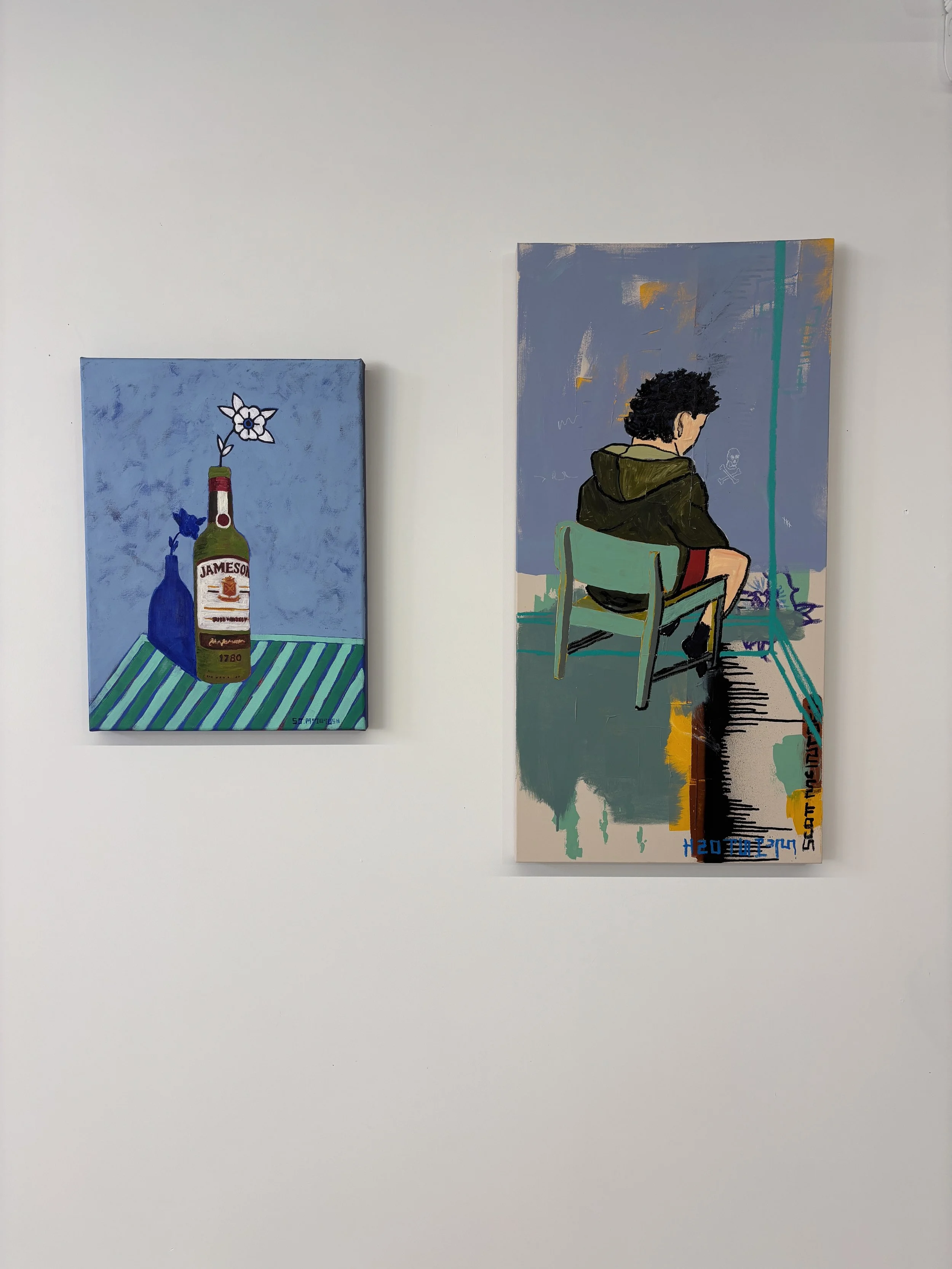
‘Dutch Courage’ takes a different approach. A Jameson whiskey bottle is painted in a more traditional still-life style, but the subject carries a much more contemporary and personal association. The work considers the role alcohol can play in social situations - that little bit of confidence we sometimes convince ourselves we need before speaking to people, walking into a room or putting ourselves out there.
It is an experience many people will recognise, and another example of Scott taking an everyday object and giving it a little more to say.
‘Time Out’ depicts a young boy sitting on a chair facing the corner - a familiar childhood punishment. But the idea becomes just as relevant in adulthood. Sometimes we all need to take a seat, step away from everything for a moment and give ourselves a time out.
One of my personal favourites in the exhibition is ‘NW’, or Norwest. If you live in Canterbury, you’ll probably understand this one. The legendary Norwest wind has been relentless, and Scott has taken that experience and translated it into something that feels slightly chaotic and unhinged. It is a painting that captures what a few days of Canterbury weather can do to your head.
Scott often paints from the heart, drawing from what is happening around him without necessarily realising it at the time. It is only when he steps back from the work that the connection becomes clear.
A smaller studio colour study of two skeletons is a beautiful example of this. One figure is larger than the other, while the smaller figure looks up at its much bigger counterpart. Scott only later recognised the relationship he had subconsciously painted - a reflection of a period of butting heads with his son, whose growing personality was challenging him as a parent.
These are vulnerable snippets of Scott's life, but they are rarely presented in a heavy or overly serious way.
Instead, there is humour. There is colour. There is a childishness that sits alongside some genuinely thoughtful questions.
On the surface, BULLSEYE is big, bright and bold. Look a little longer, though, and there is considerably more going on.
These paintings are about identity, confidence, vulnerability, everyday life and the things we use to navigate the world around us. They are about what we show others, what we keep underneath the surface, and the process of figuring out who we are along the way.
Not every work will speak to every person - and that's okay.
Art doesn't need to provide a single answer.
What I hope BULLSEYE does is make you stop for a moment, look a little closer and perhaps recognise a small piece of your own experience somewhere within it.
And if nothing else, Scott has taken his shot.
We're very glad he did.