 Image 1 of 2
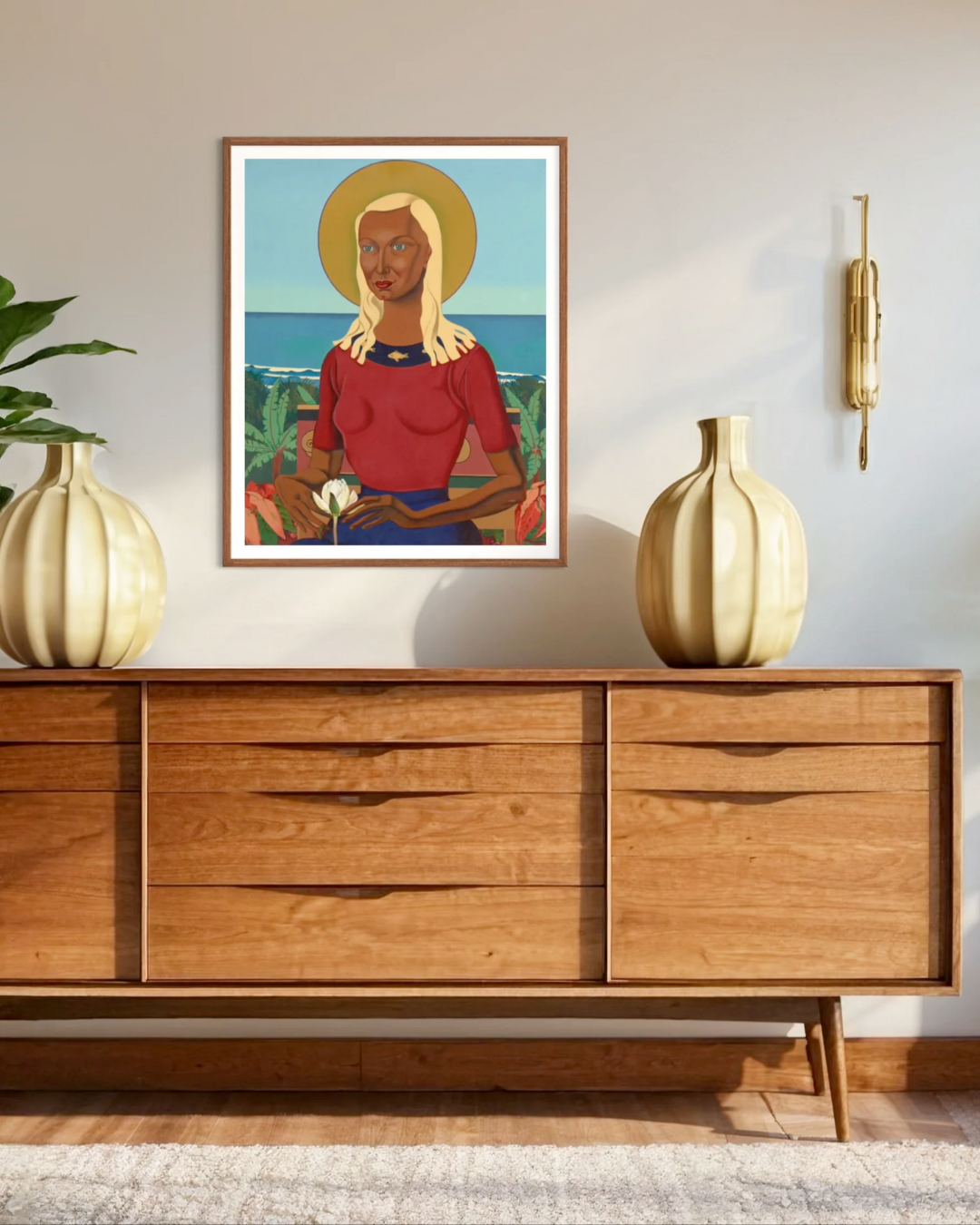 Image 2 of 2
Unframed Archival Prints by Rita Angus - Reproduced by Te Papa
Large Unframed Print 642 x 823 mm
A2 Unframed Print 420 × 594 mm
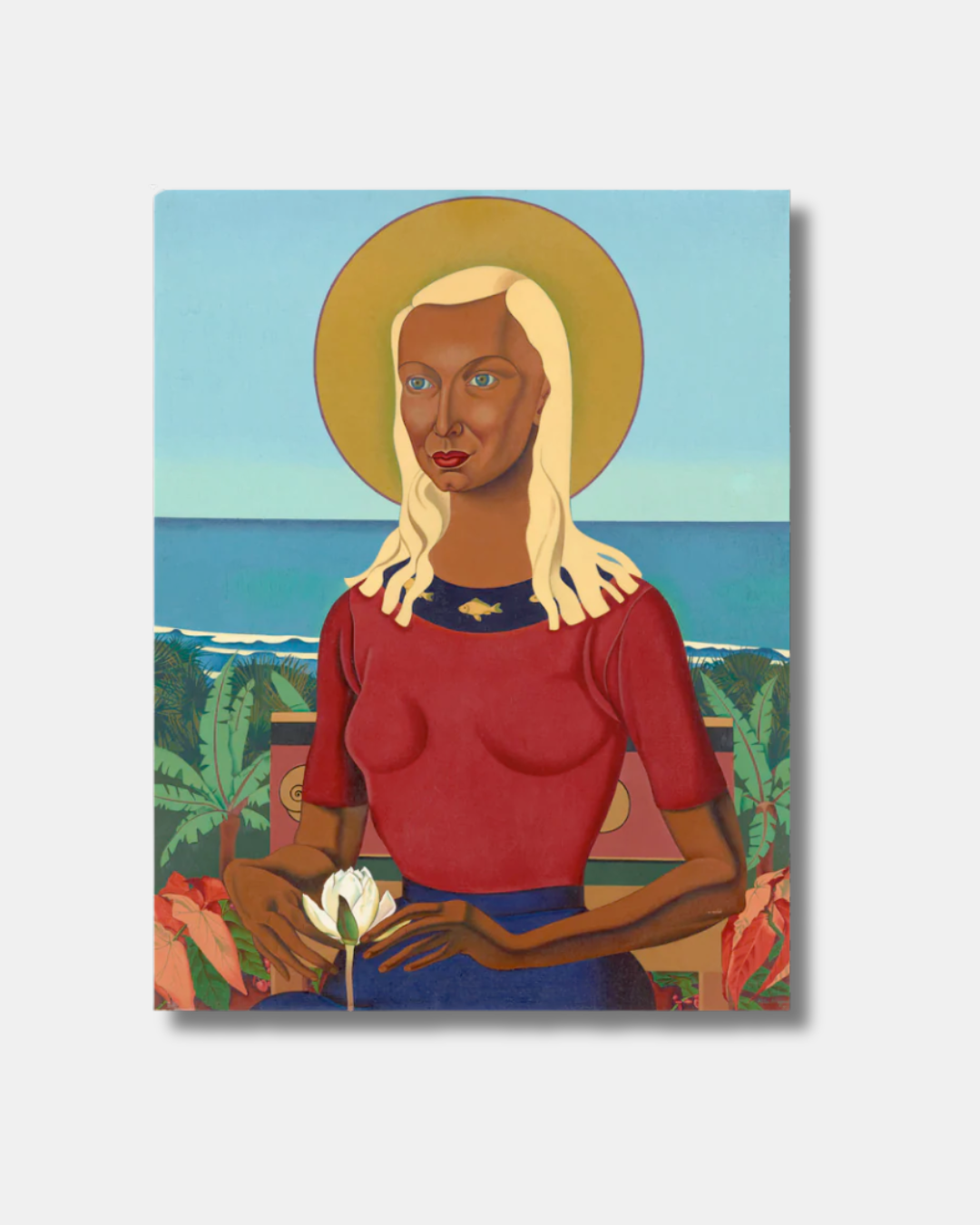
Of the many self-portraits produced by Rita Angus throughout her life, Rutu is one of the most enigmatic, richly symbolic and compelling. Although Rutu certainly bears a striking resemblance to the artist, her letters to composer Douglas Lilburn reveal that she regarded the painting as an imaginary portrait rather than a self-portrait.
Angus described the genesis of the painting to Lilburn in June 1944:
‘I began with the water colour of my Father before me, and your portrait at the end of the room. My memory served me well, about three hours later a child about 16 or 17 years of age, like my family, but not mine; she belongs to you. Of European birth, simple, monastic, Western schooling, you will find her in the paintings on the walls of the Temple Caves of India, where wandering Yogi priests sheltered, in the Bodhisattvas of the Buddhist shrines where the Chinese worshipped, in the flower and tea ceremonies of the Samurai. The Geisha and the Priestesses of the Shinto shrines of Japan.’
The painting is an elaborate fusion of traditions, ideologies and culturally diverse iconography. Rutu, named after the wife of the Ngati Toa leader Tamihana Te Rauparaha, was initially rendered as a young Western woman, but over time she developed into a racially mixed goddess with dark skin, blonde hair and blue eyes, seated on a decorative throne facing inland from the Tasman Sea. The white lotus is a further cultural reference - an Egyptian motif and homage to an ancient civilisation admired by Angus for the advanced social status enjoyed by women.
Rutu and the related paintings A goddess of mercy, 1945–47 (Christchurch Art Gallery Te Puna o Waiwheta), and Sun goddess, 1946–49 (private collection), are key members of a suite of allegorical portraits that project Angus’s ideas about pacifism, womanhood, multiculturalism, spirituality and the important role played by the artist in society. Considered by Angus to be among the major works of her lifetime, the three goddesses are her painted emissaries, conveying a message of internationalism, peace, harmony and equality, which Angus believed was the only way forward for a world recovering from war.
Unframed Archival Prints by Rita Angus - Reproduced by Te Papa
Large Unframed Print 642 x 823 mm
A2 Unframed Print 420 × 594 mm
Of the many self-portraits produced by Rita Angus throughout her life, Rutu is one of the most enigmatic, richly symbolic and compelling. Although Rutu certainly bears a striking resemblance to the artist, her letters to composer Douglas Lilburn reveal that she regarded the painting as an imaginary portrait rather than a self-portrait.
Angus described the genesis of the painting to Lilburn in June 1944:
‘I began with the water colour of my Father before me, and your portrait at the end of the room. My memory served me well, about three hours later a child about 16 or 17 years of age, like my family, but not mine; she belongs to you. Of European birth, simple, monastic, Western schooling, you will find her in the paintings on the walls of the Temple Caves of India, where wandering Yogi priests sheltered, in the Bodhisattvas of the Buddhist shrines where the Chinese worshipped, in the flower and tea ceremonies of the Samurai. The Geisha and the Priestesses of the Shinto shrines of Japan.’
The painting is an elaborate fusion of traditions, ideologies and culturally diverse iconography. Rutu, named after the wife of the Ngati Toa leader Tamihana Te Rauparaha, was initially rendered as a young Western woman, but over time she developed into a racially mixed goddess with dark skin, blonde hair and blue eyes, seated on a decorative throne facing inland from the Tasman Sea. The white lotus is a further cultural reference - an Egyptian motif and homage to an ancient civilisation admired by Angus for the advanced social status enjoyed by women.
Rutu and the related paintings A goddess of mercy, 1945–47 (Christchurch Art Gallery Te Puna o Waiwheta), and Sun goddess, 1946–49 (private collection), are key members of a suite of allegorical portraits that project Angus’s ideas about pacifism, womanhood, multiculturalism, spirituality and the important role played by the artist in society. Considered by Angus to be among the major works of her lifetime, the three goddesses are her painted emissaries, conveying a message of internationalism, peace, harmony and equality, which Angus believed was the only way forward for a world recovering from war.